
New Aligner Hurting More Than Usual? What's Normal, What's Not, and What to Do
October 04, 2026
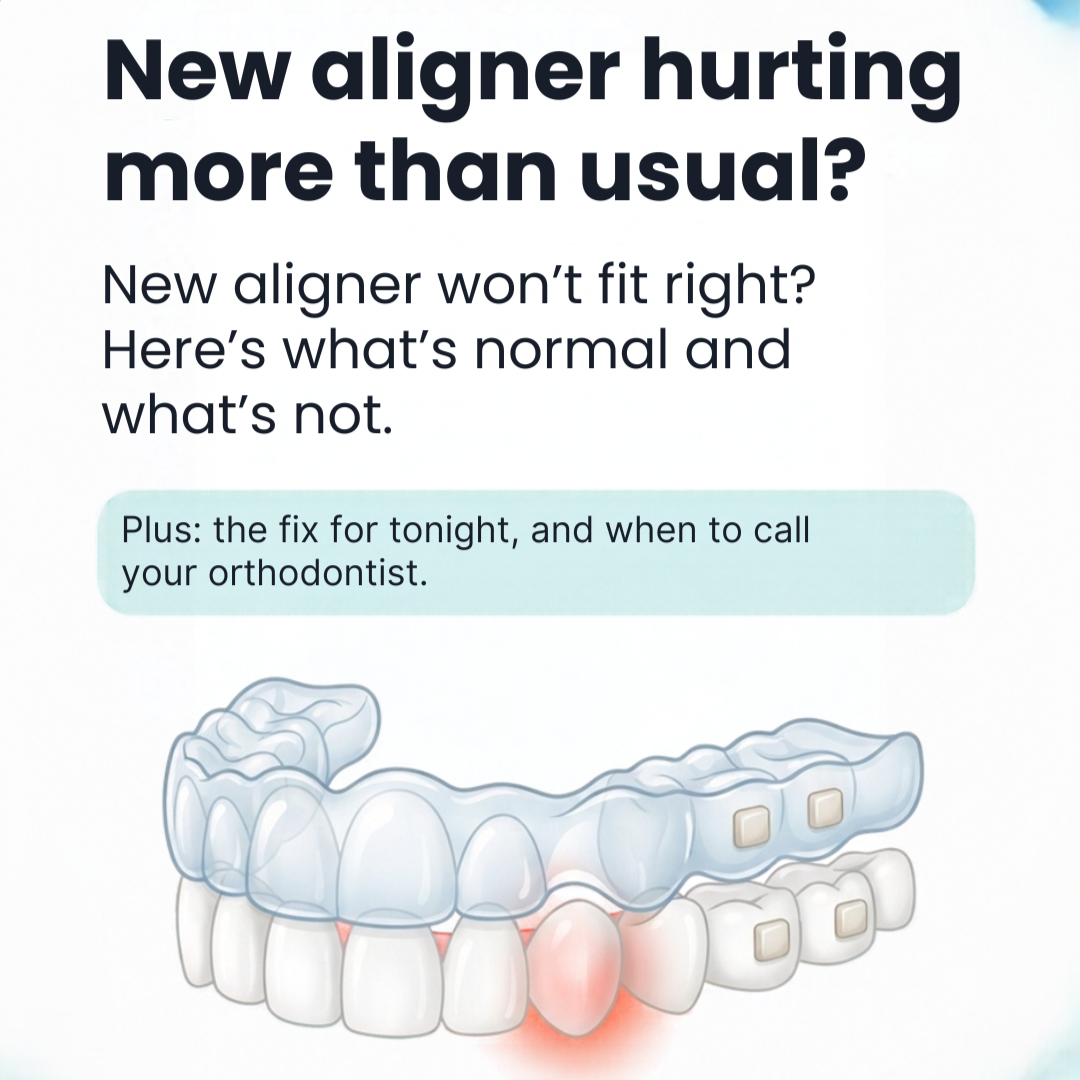
A new aligner should feel tight. It should not feel wrong. This guide helps you tell the difference, and gives you a plan for tonight, tomorrow morning, and the days after.
Is it normal?
Most aligner soreness is mild and short. Pain is usually strongest in the first week of a new aligner, and the same source cites a Penn Dental Medicine practice where users reported symptoms lasting 2 to 3 days. A small 2005 study found that 83 percent of users got used to their aligners within a week.
Usually normal:
- A tight, achy feeling across several teeth at once
- Mild tenderness when you bite firmer food
- Slightly sore gums along the aligner edge
- A small lisp on day one
It typically feels like dull pressure for the first one to three days.
Not normal, call your orthodontist:
- Sharp pain in one tooth, or one tooth that throbs
- An aligner that won't sit fully after a day or two, keeps popping off, or leaves a visible gap
- An edge that cuts your gum
- A bite that suddenly feels off, or a jaw that doesn't close evenly
- Pain that builds instead of easing, or pain in the middle of a cycle
- Pain that lasts longer than a week
Call the same day: swelling, fever, or a loose tooth (Acibadem International), or bleeding that won't stop.
Why a new aligner won't fit
Orthodontic sources name wear time first. The order of the rest is a rough guide to how often each one shows up, not a ranking from a study.
- Not enough wear time. The most common reason. Whenever the aligner is out, your teeth start drifting back. Even a couple of hours short can leave the next aligner feeling off, and long breaks make putting it back in hurt more. A 22-hour day leaves 2 hours out. One breakdown: breakfast 15 minutes, lunch 30, dinner 60, and 15 spare.
- Switching too early. If you move on before the current movement is finished, the next aligner doesn't match your teeth. Your teeth may not reach their position.
- A lost, broken, or worn attachment (the small bump on your tooth). Without it the aligner can lose its grip. If one comes off but the aligner still sits well, you can usually keep wearing it and call your dentist.
- Teeth moving slower than planned. Teeth sometimes move at a different speed than predicted. Your orthodontist may extend wear time, step you back, or adjust the plan.
- The wrong aligner. A skipped number or a mix-up of upper and lower. Check the number first.
- Heat damage. Hot water or a hot car can warp the plastic.
The switch-night routine
- After dinner, put your current aligners back in. One orthodontic office's instructions describe the order: wear the current set all day, eat dinner, put it back in, and switch right before bed. They also warn against leaving aligners out for 3 to 4 hours before switching. Some orthodontists suggest wearing the current set for about three hours first.
- Right before sleep: take out the old aligner, brush your teeth, and rinse the new aligner in warm (not hot) water.
- Put the new one in right away. Does it click in? Any gaps? Are the attachments sitting in their pockets? A visible gap at a front tooth edge means it isn't seated.
- Check your gums and all the edges. Cracked or warped aligners get sharp edges that cut gums.
- Bite a chewie gently. 30 seconds, release, repeat, focusing on the attachments, for 5 to 10 minutes, 2 to 3 times a day for the first 3 days. Start on one side and move to the other. Don't bite hard on an aligner that isn't fully seated. Offices differ on the exact minutes, so follow your orthodontist's.
Why night? You sleep through the tightest hours, and night switching gives 8 or more hours of continuous wear.
The morning after: it still hurts a lot
- Call your orthodontist. Pain that is worse than your last set, or keeps getting worse after a few days, is worth a call.
- Give details: your aligner number, which tooth hurts, and the pain from 1 to 10. Ask if this much pain is expected at this stage. Some stages hurt more than others.
- Can't reach them yet? Go back one aligner until they answer. This is a common step when it feels too tight or painful. Ideally confirm it with your orthodontist.
- Ask about one jaw or both. Upper and lower aligners are designed to progress together, so let your orthodontist decide if going back with one jaw is enough.
- If only one tooth hurts, avoid chewing on that side.
What helps while it settles
- The chewie routine above
- A cold compress on your cheek for 10 to 15 minutes
- Soft foods for the first 24 to 48 hours
- Keep it in. Avoid long breaks. Steady wear and chewies usually ease soreness within 24 to 48 hours.
How to avoid this next time
- Wear it 20 to 22 hours a day
- Don't switch early, even if the aligner feels loose
- Check the number before you open the new one
- Keep aligners away from heat: no hot water, no hot car
- Attachment came off or cracked? Tell your orthodontist
Red flags, and what to do
Red flags: a gap that doesn't close after several days, sharp pain in one tooth, an edge cutting your gum, a cracked or warped aligner.
What to do:
- Call your orthodontist first.
- Until they answer, go back one aligner.
- Never force it in. Biting down to force it can crack the plastic or hurt your teeth.
This article is general education, not medical advice. Always follow your own orthodontist's instructions.
Sources: Healthline; Ricks Family Orthodontics (2026); College Hill Dental (2026); Toombs Orthodontics (2026); Smileie (2025); Smile Perfect; Canyon Rim Dental (2026); Acibadem International (2026); American River Orthodontics (2026); Big Smile Ortho; Simply Ortho; Smile Dailey; Jawology (2026); Randall Pointe Dental; Laski OrthoSmiles (2026); Dental Home (2026); McDermott Orthodontics (2025); GL Dental; South Shore Dental Care (2025); Sea of Smiles Orthodontics (2025); Smile With Braces (2025); DSM Cosmetic Dentist; The Orthodontic Spot; Dr. Rencher (2026); Casper Smile (2026); Beach Braces (2026); Westrock Orthodontics


